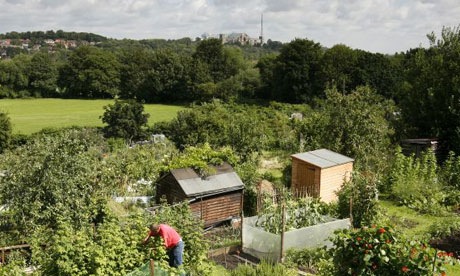
Showing posts with label imagined England. Show all posts

Friday, May 8, 2009

Swinging London

The international perception of London as "the place to be" was boosted by a Time cover story of 15 April 1966 that launched the phrase "Swinging London". The opening paragraph runs:

In this century, every decade has had its city. The fin de siècle belonged to the dreamlike round of Vienna, capital of the inbred Habsburgs and the waltz. In the changing '20s, Paris provided a moveable feast for Hemingway, Picasso, Fitzgerald and Joyce, while in the chaos after the Great Crash, Berlin briefly erupted with the savage iconoclasm of Brecht and the Bauhaus. During the shell-shocked 1940s, thrusting New York led the way, and in the uneasy 1950s it was the easy Rome of la dolce vita. Today, it is London, a city steeped in tradition, seized by change, liberated by affluence, graced by daffodils and anemones, so green with parks and squares that, as the saying goes, you can walk across it on the grass. In a decade dominated by youth, London has burst into bloom. It swings; it is the scene.


The full text of the story can be read here.

With the devaluation of the pound sterling in 1967, London became more attractive to foreign visitors than ever.

Pop music, fashion boutiques and fashion photography were the main components of "swinging" London, an international image further underlined by the rather overheated Italian film Blow-Up:

Thursday, February 26, 2009

"A country of tradition"

As somebody remarked in class, Britain is often regarded as a place very attached to traditions and traditional ways of doing things. The division of the Houses of Parliament into a House of Lords (with lords and bishops) and a House of Commons (with commoners) directly descends from the division of medieval representative institutions into first, second and third "estates" (a distinction lost in most of Europe during the French Revolutionary and Napoleonic Wars). The United Kingdom has a Chancellor of the Exchequer instead of a Minister of Finance, and a Lord Chancellor instead of a Minister of Justice.

The decision of the French Revolutionaries that wheeled vehicles should pass one another on the right hand side of the road instead of on the left (as had been customary) has gradually been adopted throughout all of mainland Europe (in Sweden as recently as 1963) but has had no impact in Britain or Ireland.

Much else in British public life attests to continuities with a pre-Revolutionary period. An obvious example is the wearing of wigs by judges who administer the Common Law. Two hundred years ago no gentleman would attend a public function without a wig; after the fashion changed it remained the "correct" attire for both judges and barristers. The Common Law, with trial by jury and the practice of adversarial advocacy, is the basis of the legal system not only in Britain and Ireland, but also in the United States at federal and state level (with the exception of the State of Louisiana) and in many Commonwealth countries throughout the world.

In academic life, too, England has maintained two medieval universities, in Oxford and Cambridge, and Scotland three, in St Andrews, Glasgow and Aberdeen, without the sort of disruption that Louvain, for instance, suffered in 1797-1834. This is perhaps one of the reasons why, throughout the English-speaking world, academic dress is a much more common sight on special occasions, such as graduation ceremonies, than it is at most Continental universities. At Oxford and Cambridge it is still a daily necessity.

England continues to enjoy an Established Church (the "Church of England", a historical compromise between Catholic practices and Reformed theology) with the Queen as its Supreme Governor. When John Major quoted George Orwell about "old maids bicycling to holy communion" being one typically British sight, the unspoken assumption is that the church being attended is "C of E".

There has been a marked reluctance to adopt the French metric system (with metres, grammes, and litres) that Napoleon imposed on the rest of Western Europe, in place of the pre-Revolutionary "imperial measures" available: the inch, foot, yard and mile, the ounce, pound, stone, hundredweight and ton, and the fluid ounce, pint and gallon (official metric equivalents established in the Units of Measurement Regulations 1995). Even in George Orwell's Nineteen Eighty-Four (Part one, chapter 8), one of the characteristics of totalitarianism is the replacement of the pint by the half-litre. These days, with metrication in legal force as part of European harmonisation, few children can do calculations in the old measurements, but beer is still sold in pint glasses, and milk in cartons marked "568ml". For most of the period covered by the course (1945-1997), the imperial measurements were very much favoured.

The United Kingdom adopted a decimal currency (with 100 pennies to the pound) only in 1971, replacing a system of coinage with twelve pennies to a shilling and twenty shillings to a pound which went back over 500 years in the case of shillings, and 1000 years for pounds and pence. Much like the changeover to the Euro, people would still ask years later, "What's that in old money?"

Apart from the visible continuities in political, legal, educational and religious institutions (often masking substantive change), and the long maintenance of idiosyncratic measurements and money, there are all sorts of popular, local, folkloristic and bizarre customs held in honour throughout the British Isles - but in much the same way that such customs are maintained in Binche or Echternach. For those interested, a good guide to such local traditions in England is the book England in Particular, or the associated website of the same name.

Friday, February 20, 2009

The English as exiles

Something remarkable has happened to the English perception of the land in which they live. [...] In the collective unconscious from which John Major drew his pictures, there exists another England. It is not the country in which the English actually live, but the place they imagine they are living in. It touches the reality they see around them at various points, but it is something ideal, like the 'other country' of Spring-Rice's patriotic hymn [...]. What has happened is that the English have become exiles from their own country.

Jeremy Paxman, The English: A Portrait of a People (1999), p. 144.

Wednesday, February 11, 2009

A changing list of unchanging essentials


"Fifty years on from now, Britain will still be the country of long shadows on county [cricket] grounds, warm beer, invincible green suburbs, dog lovers and pools fillers and, as George Orwell said, 'Old maids bicycling to holy communion through the morning mist' and, if we get our way, Shakespeare will still be read even in school."

John Major, Prime Minister, Speech to the Conservative Group for Europe, 22 April 1993.

The one eternal sight of England


England comes to me through my various senses ... The sounds of England, the tinkle of the hammer on the anvil in the country smithy, the corncrake on a dewy morning, the sound of the scythe against the whetstone, and the sight of a plough team coming over the brow of a hill, the sight that has been seen in England since England was a land, and may be seen in England long after the Empire has perished and every works [i.e. factory] in England has ceased to function: for centuries, the one eternal sight of England.

Stanley Baldwin, from a speech delivered to the Royal Society of St George, 6 May 1924; later published in On England and Other Addresses.

The corncrake:

Imagining England

Perhaps in instinctive contrast to the cold, unhappy mountains of Palestine, there rose up in my mind the picture of a village street at dusk with a smell of wood smoke lying in the still air and [...] I remembered how the church bells ring at home, and how, at that time of year, the sun leaves a dull red bar low down in the west, and against it the elms grow blacker minute by minute. Then the bats start to flicker like little bits of burnt paper and you hear the slow jingle of a team [of plough horses] coming home from the fields. ... When you think like this, sitting alone in a foreign country, you know all there is to learn about heartache.
But does it seem strange that a townsman should in his extremity see this picture? Would it not be more reasonable to expect him to see his own city? Why did I not think of St Paul’s Cathedral or Piccadilly? I have learnt since that this vision of mine is a common one [...]
This village that symbolizes England sleeps in the subconscious of many a townsman. A little London factory hand whom I met during the war confessed to me, when pressed, and after great mental difficulty, that he visualized the England he was fighting for — the England of the 'England Wants You' poster — as not London, not his own street, but as Epping Forest, the green place where he had spent Bank Holidays. And I think most of us did. The village and the English country-side are the germs of all we are and all we have become: our manufacturing cities belong to the last century and a half; our villages stand with their roots in the Heptarchy.


H. V. Morton, In Search of England (1927; reprinted 2000), pp. 1-2.


'England Wants You': slogan of a wartime recruiting poster
Epping Forest: see here
germ: seed
Heptarchy: seven Anglo-Saxon kingdoms of the 7th century