Friday, February 20, 2009

The English as exiles

Something remarkable has happened to the English perception of the land in which they live. [...] In the collective unconscious from which John Major drew his pictures, there exists another England. It is not the country in which the English actually live, but the place they imagine they are living in. It touches the reality they see around them at various points, but it is something ideal, like the 'other country' of Spring-Rice's patriotic hymn [...]. What has happened is that the English have become exiles from their own country.

Jeremy Paxman, The English: A Portrait of a People (1999), p. 144.

Thursday, February 12, 2009

Green and Pleasant Land


Britain was the first country to industrialize, the first country in the history of the world to have more people employed in industry than in agriculture, and the first country in the history of the world to have more of its population living in cities than in the countryside.

Despite this, there are two persistent images of Britain, which apply particularly strongly to England: that it is a "green and pleasant land", and that it maintains immemorial ways of doing things. Those who tend to celebrate or seek to make political capital out of these images are often conservative (to say the least), but the images themselves are not by any means limited to right-wingers.

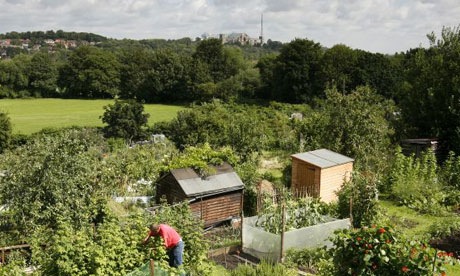
And while both images can be misleading, there is some truth in both. Despite the high level of urbanization, Britain does have beautiful countryside, and it is readily accessible from most cities: the Derbyshire peak district, for instance, from Nottingham, Sheffield and Manchester; North Wales from Liverpool; the Yorkshire moors from Leeds, Bradford, and so on. South Wales (see picture) also manages in places to be both urbanized and scenic. This is not the unspoilt "village England" of church bells and wodsmoke, but still the notion expressed in the Schama documentary (and also in Jeremy Paxman's The English) that the "green and pleasant" theme applies only to the South of England is a misconception not found outside the South of England.

For immemorial custom, see the separate post.

Wednesday, February 11, 2009

A changing list of unchanging essentials


"Fifty years on from now, Britain will still be the country of long shadows on county [cricket] grounds, warm beer, invincible green suburbs, dog lovers and pools fillers and, as George Orwell said, 'Old maids bicycling to holy communion through the morning mist' and, if we get our way, Shakespeare will still be read even in school."

John Major, Prime Minister, Speech to the Conservative Group for Europe, 22 April 1993.

The one eternal sight of England


England comes to me through my various senses ... The sounds of England, the tinkle of the hammer on the anvil in the country smithy, the corncrake on a dewy morning, the sound of the scythe against the whetstone, and the sight of a plough team coming over the brow of a hill, the sight that has been seen in England since England was a land, and may be seen in England long after the Empire has perished and every works [i.e. factory] in England has ceased to function: for centuries, the one eternal sight of England.

Stanley Baldwin, from a speech delivered to the Royal Society of St George, 6 May 1924; later published in On England and Other Addresses.

The corncrake:

Imagining England

Perhaps in instinctive contrast to the cold, unhappy mountains of Palestine, there rose up in my mind the picture of a village street at dusk with a smell of wood smoke lying in the still air and [...] I remembered how the church bells ring at home, and how, at that time of year, the sun leaves a dull red bar low down in the west, and against it the elms grow blacker minute by minute. Then the bats start to flicker like little bits of burnt paper and you hear the slow jingle of a team [of plough horses] coming home from the fields. ... When you think like this, sitting alone in a foreign country, you know all there is to learn about heartache.
But does it seem strange that a townsman should in his extremity see this picture? Would it not be more reasonable to expect him to see his own city? Why did I not think of St Paul’s Cathedral or Piccadilly? I have learnt since that this vision of mine is a common one [...]
This village that symbolizes England sleeps in the subconscious of many a townsman. A little London factory hand whom I met during the war confessed to me, when pressed, and after great mental difficulty, that he visualized the England he was fighting for — the England of the 'England Wants You' poster — as not London, not his own street, but as Epping Forest, the green place where he had spent Bank Holidays. And I think most of us did. The village and the English country-side are the germs of all we are and all we have become: our manufacturing cities belong to the last century and a half; our villages stand with their roots in the Heptarchy.


H. V. Morton, In Search of England (1927; reprinted 2000), pp. 1-2.


'England Wants You': slogan of a wartime recruiting poster
Epping Forest: see here
germ: seed
Heptarchy: seven Anglo-Saxon kingdoms of the 7th century

There'll Always Be an England...


(text from the "Know Britain" website; click on the picture to enlarge)

Monday, February 2, 2009

Brief Encounter

This classic of British cinema will be shown at 7 p.m. in Mont01.

For information on the film, see the pages on the website of the British Film Institute.